
Article Immortality
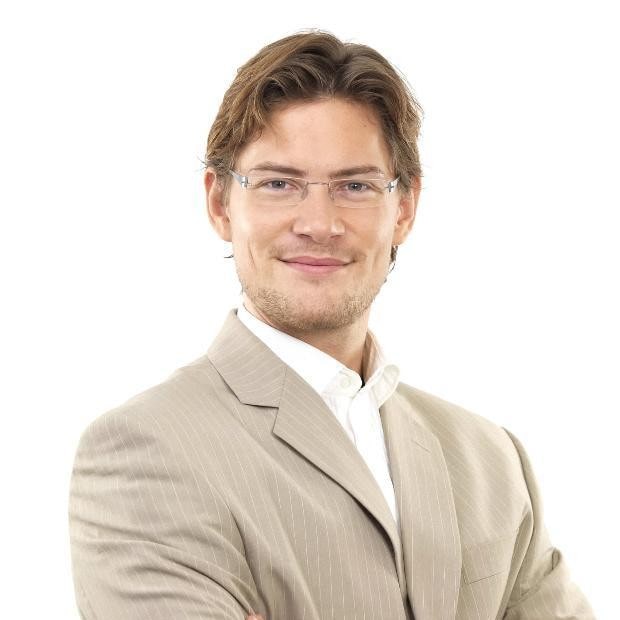
2050 — and immortality is within our grasp
Britain’s leading thinker on the future offers an extraordinary vision of life in the next 45 years
https://www.theguardian.com/science/2005/may/22/theobserver.technology
by David Smith technology correspondent
for The Guardian on May, 22, 2005
Aeroplanes will be too afraid to crash, yoghurts will wish you good morning before being eaten and human consciousness will be stored on supercomputers, promising immortality for all — though it will help to be rich.
These fantastic claims are not made by a science fiction writer or a crystal ball-gazing lunatic. They are the deadly earnest predictions of Ian Pearson, head of the futurology unit at BT.
‘If you draw the timelines, realistically by 2050 we would expect to be able to download your mind into a machine, so when you die it’s not a major career problem,’ Pearson told The Observer. ‘If you’re rich enough then by 2050 it’s feasible. If you’re poor you’ll probably have to wait until 2075 or 2080 when it’s routine. We are very serious about it. That’s how fast this technology is moving: 45 years is a hell of a long time in IT.’
Pearson, 44, has formed his mind-boggling vision of the future after graduating in applied mathematics and theoretical physics, spending four years working in missile design and the past 20 years working in optical networks, broadband network evolution and cybernetics in BT’s laboratories. He admits his prophecies are both ‘very exciting’ and ‘very scary’.
He believes that today’s youngsters may never have to die, and points to the rapid advances in computing power demonstrated last week, when Sony released the first details of its PlayStation 3. It is 35 times more powerful than previous games consoles. ‘The new PlayStation is 1 per cent as powerful as a human brain,’ he said. ‘It is into supercomputer status compared to 10 years ago. PlayStation 5 will probably be as powerful as the human brain.’
The world’s fastest computer, IBM’s BlueGene, can perform 70.72 trillion calculations per second (teraflops) and is accelerating all the time. But anyone who believes in the uniqueness of consciousness or the soul will find Pearson’s next suggestion hard to swallow. ‘We’re already looking at how you might structure a computer that could possibly become conscious. There are quite a lot of us now who believe it’s entirely feasible.
‘We don’t know how to do it yet but we’ve begun looking in the same directions, for example at the techniques we think that consciousness is based on: information comes in from the outside world but also from other parts of your brain and each part processes it on an internal sensing basis. Consciousness is just another sense, effectively, and that’s what we’re trying to design in a computer. Not everyone agrees, but it’s my conclusion that it is possible to make a conscious computer with superhuman levels of intelligence before 2020.’
He continued: ‘It would definitely have emotions — that’s one of the primary reasons for doing it. If I’m on an aeroplane I want the computer to be more terrified of crashing than I am so it does everything to stay in the air until it’s supposed to be on the ground.
‘You can also start automating an awful lots of jobs. Instead of phoning up a call centre and getting a machine that says, «Type 1 for this and 2 for that and 3 for the other,» if you had machine personalities you could have any number of call staff, so you can be dealt with without ever waiting in a queue at a call centre again.’
Pearson, from Whitehaven in Cumbria, collaborates on technology with some developers and keeps a watching brief on advances around the world. He concedes the need to debate the implications of progress. ‘You need a completely global debate. Whether we should be building machines as smart as people is a really big one. Whether we should be allowed to modify bacteria to assemble electronic circuitry and make themselves smart is already being researched.
‘We can already use DNA, for example, to make electronic circuits so it’s possible to think of a smart yoghurt some time after 2020 or 2025, where the yoghurt has got a whole stack of electronics in every single bacterium. You could have a conversation with your strawberry yogurt before you eat it.’
In the shorter term, Pearson identifies the next phase of progress as ‘ambient intelligence’: chips with everything. He explained: ‘For example, if you have a pollen count sensor in your car you take some antihistamine before you get out. Chips will come small enough that you can start impregnating them into the skin. We’re talking about video tattoos as very, very thin sheets of polymer that you just literally stick on to the skin and they stay there for several days. You could even build in cellphones and connect it to the network, use it as a video phone and download videos or receive emails.’
Philips, the electronics giant, is developing the world’s first rollable display which is just a millimetre thick and has a 12.5cm screen which can be wrapped around the arm. It expects to start production within two years.
The next age, he predicts, will be that of ‘simplicity’ in around 2013-2015. ‘This is where the IT has actually become mature enough that people will be able to drive it without having to go on a training course.
‘Forget this notion that you have to have one single chip in the computer which does everything. Why not just get a stack of little self-organising chips in a box and they’ll hook up and do it themselves. It won’t be able to get any viruses because most of the operating system will be stored in hardware which the hackers can’t write to. If your machine starts going wrong, you just push a button and it’s reset to the factory setting.’
Pearson’s third age is ‘virtual worlds’ in around 2020. ‘We will spend a lot of time in virtual space, using high quality, 3D, immersive, computer generated environments to socialise and do business in. When technology gives you a life-size 3D image and the links to your nervous system allow you to shake hands, it’s like being in the other person’s office. It’s impossible to believe that won’t be the normal way of communicating.
What the future will be like is hard to predict. Science fiction writers describe the future in different ways. But in most cases, they are similar in one thing: robots will appear in the human society, which will have artificial intelligence, and people will begin to move to other planets. Perhaps that is how it will be. After all, once people thought that the earth was flat, but when they began to surf the expanses of the ocean and discover the continents, they realized that things were completely different.
It is difficult to predict the future of our planet. Many people think that in the future people will create robots with artificial intelligence. Some are afraid of this turn of events, because. these robots can enslave humans. I believe that artificial intelligence will not put itself above people and will work for the benefit of society.
In a few decades, people will begin to populate the planets of our solar system.
Projects are already being prepared for flights of groups of people to the Moon and Mars. It can also be assumed that global warming will occur on Earth. The level of the world’s oceans will rise, most of the land will be flooded, and people will create floating cities. These cities will be managed by artificial intelligence, and each city will be independent, not dependent on others.
And of course, we should not forget about the environment. After all, the further progress moves, the more she suffers. In the future, the environment will recover. The energy of coal and gas will be replaced by the energy of the Sun. There will be fewer by-products in production. Hundreds of waste processing plants will appear. All this will contribute to the restoration of the environment.
In general, one can think endlessly about the future of our planet, but in any case, everything depends on the person.
1. Aeroplanes will be too afraid to crash, yoghurts will wish you good morning before being eaten and human consciousness will be stored on supercomputers, promising immortality for all — though it will help to be rich.
2. These fantastic claims are not made by a science fiction writer or a crystal ball-gazing lunatic.
3. They are the deadly earnest predictions of Ian Pearson, head of the futurology unit at BT.
4. ‘If you draw the timelines, realistically by 2050 we would expect to be able to download your mind into a machine, so when you die it’s not a major career problem,’ Pearson told The Observer.
5. If you’re poor you’ll probably have to wait until 2075 or 2080 when it’s routine.
6. We are very serious about it.
7. That’s how fast this technology is moving: 45 years is a hell of a long time in IT.’
8. Pearson, 44, has formed his mind-boggling vision of the future after graduating in applied mathematics and theoretical physics, spending four years working in missile design and the past 20 years working in optical networks, broadband network evolution and cybernetics in BT’s laboratories.
9. He admits his prophecies are both ‘very exciting’ and ‘very scary’.
10. He believes that today’s youngsters may never have to die, and points to the rapid advances in computing power demonstrated last week, when Sony released the first details of its PlayStation 3.
11. It is 35 times more powerful than previous games consoles.
12. ‘The new PlayStation is 1 per cent as powerful as a human brain,’ he said. ‘It is into supercomputer status compared to 10 years ago.
13. PlayStation 5 will probably be as powerful as the human brain.’
14. The world’s fastest computer, IBM’s BlueGene, can perform 70.72 trillion calculations per second (teraflops) and is accelerating all the time.
15. ‘We’re already looking at how you might structure a computer that could possibly become conscious.
16. There are quite a lot of us now who believe it’s entirely feasible.
17. ‘We don’t know how to do it yet but we’ve begun looking in the same directions, for example at the techniques we think that consciousness is based on: information comes in from the outside world but also from other parts of your brain and each part processes it on an internal sensing basis.
18. Consciousness is just another sense, effectively, and that’s what we’re trying to design in a computer.
19. Not everyone agrees, but it’s my conclusion that it is possible to make a conscious computer with superhuman levels of intelligence before 2020.’
20. He continued: ‘It would definitely have emotions — that’s one of the primary reasons for doing it.
21. If I’m on an aeroplane I want the computer to be more terrified of crashing than I am so it does everything to stay in the air until it’s supposed to be on the ground.
22. ‘You can also start automating an awful lots of jobs.
23. Instead of phoning up a call centre and getting a machine that says, «Type 1 for this and 2 for that and 3 for the other,» if you had machine personalities you could have any number of call staff, so you can be dealt with without ever waiting in a queue at a call centre again.’
24. Pearson, from Whitehaven in Cumbria, collaborates on technology with some developers and keeps a watching brief on advances around the world. He concedes the need to debate the implications of progress.
25. ‘You need a completely global debate.
centre the point around which a circle or sphere is described
terrify cause to feel extreme fear.
level a horizontal plane or line with respect to the distance above or below a given point.
afraid worried that something undesirable will occur or be done.
fantastic extraordinarily good or attractive.
deadly causing or able to cause death.
timeline a graphical representation of a period of time, on which important events are marked.
poor lacking sufficient money to live at a standard considered comfortable or normal in a society.
serious demanding or characterized by careful consideration or application.
technology the application of scientific knowledge for practical purposes, especially in industry.
vision the sense by which the qualities of an object (as color) that make up its appearance are perceived through a process
power the ability or capacity to do something or act in a particular way.
perform carry out, accomplish, or fulfil (an action, task, or function).
structure the action of building
believe accept that (something) is true, especially without proof.
technique the manner and ability with which an artist, writer, dancer, athlete
Consciousness the state of being aware of and responsive to one’s surroundings.
conclusion final decision reached by reasoning I came to the conclusion that the plan won’t work
continue to maintain without interruption a condition, course, or action
aeroplane a plane
automating convert (a process or facility) to be operated by largely automatic equipment.
awful very bad or unpleasant.
machine a mechanically, electrically, or electronically operated device
staff a group of people who work for an organization
world
global
или напишите нам прямо сейчас:
Здравствуйте. Скажите пожалуйста, планирую поступать в магистратуру на факультет Психологии « Психология личности»в РГГУ скажите пожалуйста, есть ли у вас, ответы на вступительные экзамены? так как, планирую, сделать акцент на бюджет. Спасибо.
Арсений, здравствуйте! Прошу Вас прислать всю необходимую информацию на почту info@otlichnici.ru и написать что необходимо выполнить. Я посмотрю описание к заданиям и подскажу вам по стоимости и срокам выполнения.
Дистанционная помощь в защите ВКР
Анастасия, здравствуйте! Прошу Вас прислать всю необходимую информацию на почту info@otlichnici.ru и написать что необходимо выполнить. Я посмотрю описание к заданиям и подскажу вам по стоимости и срокам выполнения.
Здравствуйте. Нужна срочно практическая часть вкр, третья глава. Скину похожие работы, на которые можно ориентироваться
Александр, здравствуйте! Прошу Вас прислать всю необходимую информацию на почту info@otlichnici.ru и написать что необходимо выполнить. Я посмотрю описание к заданиям и подскажу вам по стоимости и срокам выполнения.
вкр по теме: экологический туризм России : анализ состояния, проблемы и перспективы
Людмила, здравствуйте! Прошу Вас прислать всю необходимую информацию на почту info@otlichnici.ru и написать что необходимо выполнить. Я посмотрю описание к заданиям и подскажу вам по стоимости и срокам выполнения.
Здравствуйте вы защищаете ВКР?
Ольга, здравствуйте! Прошу Вас прислать всю необходимую информацию на почту info@otlichnici.ru и написать что необходимо выполнить. Я посмотрю описание к заданиям и подскажу вам по стоимости и срокам выполнения.
Написать магистерскую ВКР на тему «Совершенствование логистических бизнес-процессов на примере торговой компании». Не менее 100 страниц.
Миша, здравствуйте! Прошу Вас прислать всю необходимую информацию на почту info@otlichnici.ru и написать что необходимо выполнить. Я посмотрю описание к заданиям и подскажу вам по стоимости и срокам выполнения.
Здравствуйте нужна работа Вкр
Лена, здравствуйте! Прошу Вас прислать всю необходимую информацию на почту info@otlichnici.ru и написать что необходимо выполнить. Я посмотрю описание к заданиям и подскажу вам по стоимости и срокам выполнения.
Написать ВКР 3 раздела Тема строительство строительство жилого дома с применением каркасно-монолитных технологий Антиплагиат от 75% ПЗ и чертежи
Владимир, здравствуйте! Прошу Вас прислать всю необходимую информацию на почту info@otlichnici.ru и написать что необходимо выполнить. Я посмотрю описание к заданиям и подскажу вам по стоимости и срокам выполнения.